The Layering Guide: How to Stay Warm and Stylish
Affiliate Disclosure: This post contains affiliate links. If you purchase through these links, we may earn a commission at no extra cost to you.
Layering is the most useful cold-weather styling skill — simpler than it seems, but more nuanced than “put a sweater over your shirt.” Good layering keeps you warm without bulk, lets you adapt to indoor/outdoor temperature swings, and creates visual interest in an outfit. Bad layering turns you into the Michelin Man.
Here’s how to layer well.
The Three-Layer System
Every warm-weather outfit works on a three-layer system:
Layer 1: Base
Closest to the skin. This layer should fit snugly, wick moisture, and never be bulky. Think: a thin merino wool t-shirt, a long-sleeve crewneck, or a fitted turtleneck.
The fit matters: a base layer that bunches makes every subsequent layer bunch too. Merino is the best fabric choice — it’s warm even when damp, doesn’t smell, and is thin enough to layer.
Layer 2: Insulation
This is your warmth layer. It traps a layer of air between itself and the base layer. Think: a cashmere or wool-blend sweater, a quilted vest, or a flannel shirt.
Here’s the key most people miss: this layer should be more substantial than the base layer in visual weight. A fine merino base + a chunky-knit sweater looks intentional; a fine merino base + a fine merino sweater looks like you accidentally put on two base layers.
Layer 3: Shell/Outer
The third layer protects against wind and rain. It’s your coat or jacket. For winter, a down puffer, a wool coat, or a shearling do the job. For transition weather, a trench or utility jacket.
Layers for Cold Climates
If you’re in a region where winter means sub-freezing temperatures, add a layer 0: thermal underwear.
Silk or merino thermal tops and bottoms add 15 degrees worth of warmth without changing your silhouette. They’re the difference between shivering through your commute and actually enjoying it. They also mean you can wear a light coat even in January — the thermal underwear provides the warmth, not the coat.
Light Layers vs Heavy Layers
A layer doesn’t have to be thick to add warmth. Multiple thin layers trap more air and adapt better than one thick layer. The Inuit know this — they wear thin layers of caribou hide and remain perfectly warm.
Three thin layers (merino base + thin knit + light jacket) often feel warmer than one heavy sweater + coat. And the three layers can come off individually if you get hot — the heavy sweater is all-or-nothing.
Proportion Rules
When layering, remember these proportions:
- Each layer should be slightly longer than the one beneath it. The base peeks out at the collar and cuff; the insulation peeks out at the hem of the outer. This looks intentional.
- Cuffs stack elegantly. Don’t try to perfectly button cuffs through three layers. Let the sleeve lengths stack — shirt cuff on top of sweater cuff on top of coat sleeve. It’s a beautiful detail.
- The outer layer should be the roomiest. A coat that barely fits over your sweater limits your layering options. Buy coats slightly oversized to accommodate layers.
Layering Mistakes to Avoid
Wrong Fabric Order
Always put natural fibers against your skin. Merino, silk, cotton. Save synthetics (polyester, nylon) for outer layers.
Too Many Thick Layers
Three thin layers beat two thick ones. Don’t pile three crewneck sweaters on top of each other — wear one base layer, one mid-layer, one outer.
Belted Coats Over Thick Layers
Belts cinch the coat and the layers underneath. If you’re wearing multiple layers, leave the coat unbelted to avoid bunching.
Ignoring the Neck
Your neck is a major heat-loss zone. A turtleneck, a silk scarf, or even a thin cotton bandana keeps you noticeably warmer than the same outfit without one.
Seasonal Layering Formulas
Fall/Mid Season
- Base: Crewneck tee
- Insulation: Open cardigan
- Outer: Denim jacket
Total: 3 layers, no coat. Good for 50-65 degrees.
Winter Casual
- Base: Merino long-sleeve
- Insulation: Cashmere sweater
- Outer: Puffer coat
- Scarf
Total: 4 layers. Good for 25-45 degrees.
Winter Formal
- Base: Fitted long-sleeve
- Insulation: Blazer
- Outer: Wool coat
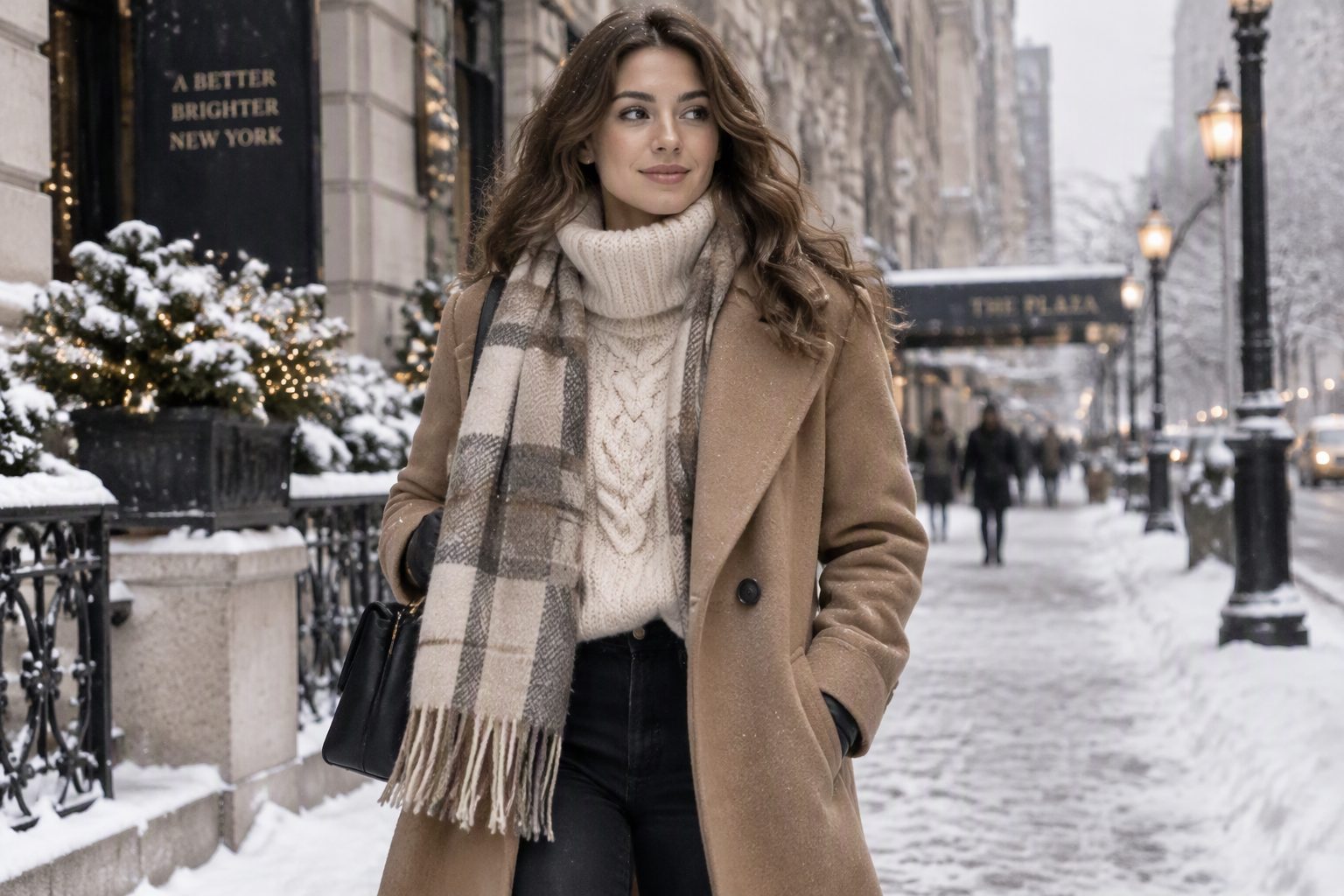
For extra cold days, add a thermal base layer beneath the long-sleeve and wrap a cashmere scarf at the neck.
Layering Accessories
Scarves
- Wool or cashmere for winter
- Silk for transition seasons
- Wear them long, knotted, or looped — never tucked
- Cotton or cashmere, not messy strands
Hats
Cashmere beanies are unusually warm and look expensive. Avoid acrylic — it’ll make you sweat.
Gloves
Leather for looks, Thinsulate-lined for warmth. Never pure knit — they don’t block wind.
Final Thoughts
Layering is less about quantity than intention. The most stylish layered outfits use 3-4 pieces deliberately — each visible and adding a layer of interest.
When you perfect layering, cold weather stops being a style challenge. It becomes a styling opportunity — the season you can combine the most pieces, play with the most textures, and build the most interesting outfits. Layer well, and winter becomes a favorite season.