Investment Pieces vs. Trend Items: Where to Spend and Save
Affiliate Disclosure: This post contains affiliate links. If you purchase through these links, we may earn a commission at no extra cost to you.
Every woman has made the mistake: spending too much on a trendy piece that looked dated by next season, then wearing the same cheap blazer to death because it couldn’t survive more than 15 washes. Learning where to invest your clothing budget — and where to save — is one of the most valuable style skills you can develop.
The principle is simple: spend more on pieces you’ll wear often and keep for years; spend less on pieces that serve a short-term purpose or are experimental. Here’s the complete breakdown.
The Investment Pieces
These are the items where quality matters most. They’re worth spending real money on because they form the foundation of your wardrobe and you’ll wear them for years.
1. Winter Coat ($200–$500+)
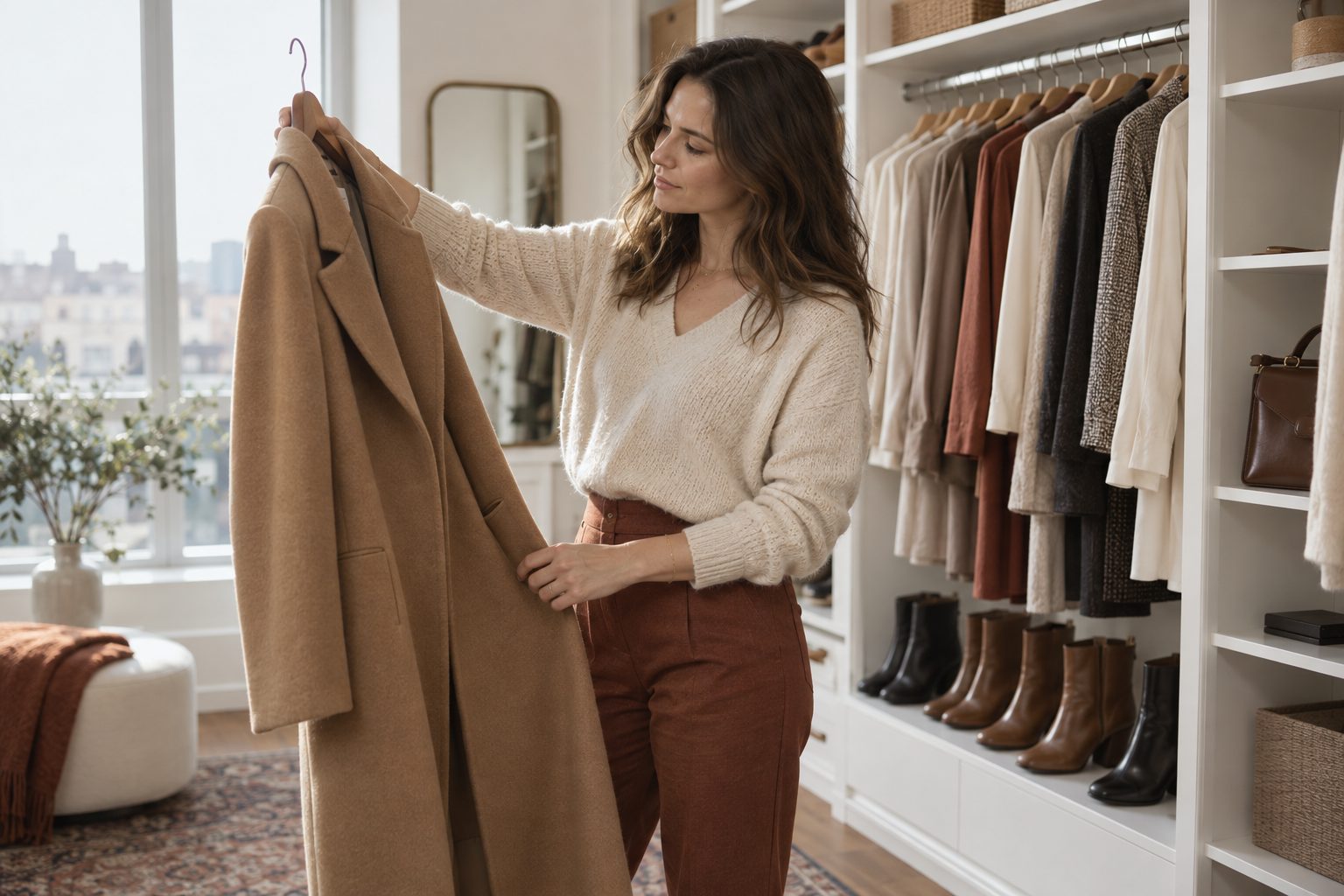
Your winter coat is visible every single day for 4–6 months. It’s the first thing people see, the last thing you take off, and the piece that takes the most weather abuse. A cheap coat pills, loses its shape, and looks sad by year two. A quality wool or down coat lasts a decade.
What to look for: 80%+ wool content for wool coats, 600+ fill power for down, a lining that covers the full interior, and real horn or leather buttons. The shoulders should fit perfectly — this is the one piece that can’t be tailored.
2. Leather Boots ($150–$300+)
Boots are the most-used footwear in fall and winter. They’re walked in, rained on, snowed on, and expected to survive daily wear. Full-grain leather boots can be re-soled, conditioned, and worn for 10+ years. Cheap boots crack, peel, and end up in the trash within a season.
What to look for: Full-grain leather (not “genuine leather” or “man-made”), Goodyear welted or Blake-stitched construction (not glued), and a substantial sole. Avoid synthetic uppers — they don’t breathe and they don’t last.
3. Everyday Handbag ($150–$400+)
A well-constructed leather bag holds its shape, resists scuffs, and stays beautiful for years. It’s also the accessory people see most — it sits on the table, dangles from your shoulder, and appears in every photo. Investment in one good bag is more sustainable than cycling through cheap ones every few months.
What to look for: Full-grain leather, YKK or Riri zippers, hardware that feels heavy (not tinny), and a lining that extends fully and cleanly. Stitching should be even and tight.
4. Blazer ($100–$300+)
A blazer matters because it’s the piece that can dress up anything. A well-made blazer holds its shape over years of wear. A cheap one goes shiny at the elbows, bags at the hip, and loses its structure.
What to look for: Wool-blend fabric, functional buttons (a sign of quality), smooth and even stitching, and a lining that doesn’t pull or bunch. The shoulder seam should sit perfectly on your shoulder.
5. Jeans ($75–$200)
Jeans are the most-worn item in most wardrobes. Heavy, durable denim holds its shape, resists bagging at the knees, and ages beautifully. Cheap denim thins at stress points and loses its shape within weeks.
What to look for: 98–100% cotton (less than 2% elastane), at least 10oz fabric weight, and a clean, even wash. Avoid jeans with heavy whiskering or distressing — they look dated fast.
6. Fine Jewelry ($50–$300+)
One pair of solid gold hoops worn every day is better than 20 cheap pairs that tarnish and irritate. Fine jewelry is the definition of buy-once-cry-once.
What to look for: 14k solid gold or 14k gold-filled (for those on a budget). Any piece you wear daily should be at least gold-filled — nothing that will turn green or lose its color.
7. White Sneakers ($80–$150)
Good sneakers are clean, white, and made of leather — not canvas. Leather sneakers clean easily, hold their shape, and look polished. Cheap canvas sneakers look dirty after a week and can’t be revived.
What to look for: Full-grain leather upper, removable insole (a sign of quality construction), and a substantial sole that won’t compress after 2 weeks.
Where to Save
These are items where the expensive version isn’t significantly better than the affordable one. Trend-led, seasonal, or frequently-replaced pieces belong in this category.
1. Trend Pieces
If it’s a micro-trend — cargo pants with cargo pockets, checkerboard prints, oversized vest tops — save your money. Trend pieces have a shelf life of one season, maybe two. Buy these at affordable retailers.
2. Summer Sandals
Sandals take a beating all summer — beach, pool, pavement, sun. They will not last more than a season regardless of price. Buy affordable, wear them out, and start fresh next summer.
3. Swimsuits
Bathing suits stretch out, fade, and pill after one season of regular wear. There’s no reason to spend $200 on a suit when the affordable version works just as well. The exception: if you swim daily or competitively, quality matters.
4. Loungewear
If you’re wearing it only inside the house, you don’t need designer fabrics. Look for soft knits in affordable brands. Splurge only on the one loungewear set you might wear outside (to the grocery store, to a friend’s house).
5. Workout Clothes
Unless you’re a professional athlete or fitness influencer, $150 leggings won’t do anything $40 leggings can’t. Look for squat-proof opacity and a wide waistband — you can find these in affordable brands.
6. Statement Jewelry
Colorful earrings, stacked bracelets, trendy necklaces — all these are one-season pieces. Buy inexpensive versions and replace them when trends change. Reserve fine jewelry for the classic pieces you wear daily.
7. Trend Denim Washes
Light-wash, acid-wash, and tie-dyed jeans look great for a season and dated quickly. Buy these cheap. Save your real denim budget for classic dark and medium blue washes that last.
The Gray Area
Some pieces can go either way, depending on your lifestyle:
Trench coats: If you’ll wear it daily, invest. If you live in a warm climate where you’ll wear it 5 times a year, save.
Silk scarves: Quality matters (real silk, hand-rolled edges), but you can find excellent options at mid-range prices. Don’t feel compelled to buy luxury brand versions.
Dresses: Investment for everyday office dresses; save for special-occasion dresses you’ll wear once.
Tights: Spend more on sheer tights (they last longer and won’t rip); save on opaque tights (they’re harder to rip regardless of quality).
How to Decide: 4 Questions
Before buying anything — investment or budget — ask:
- Will I wear this at least 30 times? If not, it’s a no regardless of price.
- Will I still want to wear this in 3 years? If yes, it’s an investment piece.
- Is this a piece I already own several of? If yes, save your money.
- Is there an affordable alternative that’s 80% as good? If yes, consider the budget option unless you’ll wear the piece constantly.
Budget Allocation
If your annual clothing budget is $1200 (roughly $100/month), a sustainable split would look like:
- Investment pieces (60%): $720 on 3–4 items (coat, boots, blazer, or bag)
- Everyday basics (25%): $300 on tees, jeans, and casual tops
- Trend pieces (15%): $180 on seasonal fun pieces
This balances durability (the foundation you’ll wear for years) with currency (the trends that keep your look modern) without breaking the bank.
The Takeaway
Quality isn’t about spending more — it’s about spending right. A $10 t-shirt that you love and wear constantly is a better investment than a $400 sweater sitting in your closet. The goal is to match the spend to the function: durable pieces for the long haul, affordable experiments for the short term.
When you start thinking this way, you stop regretting purchases. Every buy becomes intentional — either a piece you’ll wear for years, or a piece you’ll enjoy for a season. That’s a wardrobe that works. And that’s style without stress.