How to Style a Blazer for Day-to-Night Transitions
Affiliate Disclosure: This post contains affiliate links. If you purchase through these links, we may earn a commission at no extra cost to you.
A good blazer is the hardest-working piece in your wardrobe. It’s the garment that makes jeans look intentional, dresses look polished, and hastily-thought-out outfits look like you planned them. But where a blazer truly shines is in its ability to carry you from day to night without a complete outfit change.
Here’s how to make one blazer work across three completely different scenarios — all in a single day.
Morning: The Office-Ready Look
For a 9 AM meeting, you want to look sharp without trying too hard. The formula is simple: blazer + simple top + tailored trousers + flats.
Start with a well-fitted blazer in a neutral tone — black, navy, or camel. Underneath, wear a thin crewneck or silk-blend top in a color that complements the blazer. Pair with tailored trousers — flat-front or pleated, depending on your body type. Finish with pointed-toe flats for comfort during the commute.
The key to making this look read “promoted” rather than “trying too hard” is the fit. The blazer shoulder should sit on your shoulder, the trousers should break just once at the shoe, and everything should be wrinkle-free. If you only have time to do one thing in the morning, iron your collar.
Blazer buying tip: An unstructured blazer (no shoulder pads, minimal lining) is the most versatile option. It looks professional enough for the office but relaxed enough for after-hours. Look for a wool-blend fabric with a touch of stretch for comfort.
Afternoon: Coffee Run to Casual Lunch
Between meetings, you might need to grab coffee with a colleague or step out for a quick lunch. The transition is about loosening up — literally.
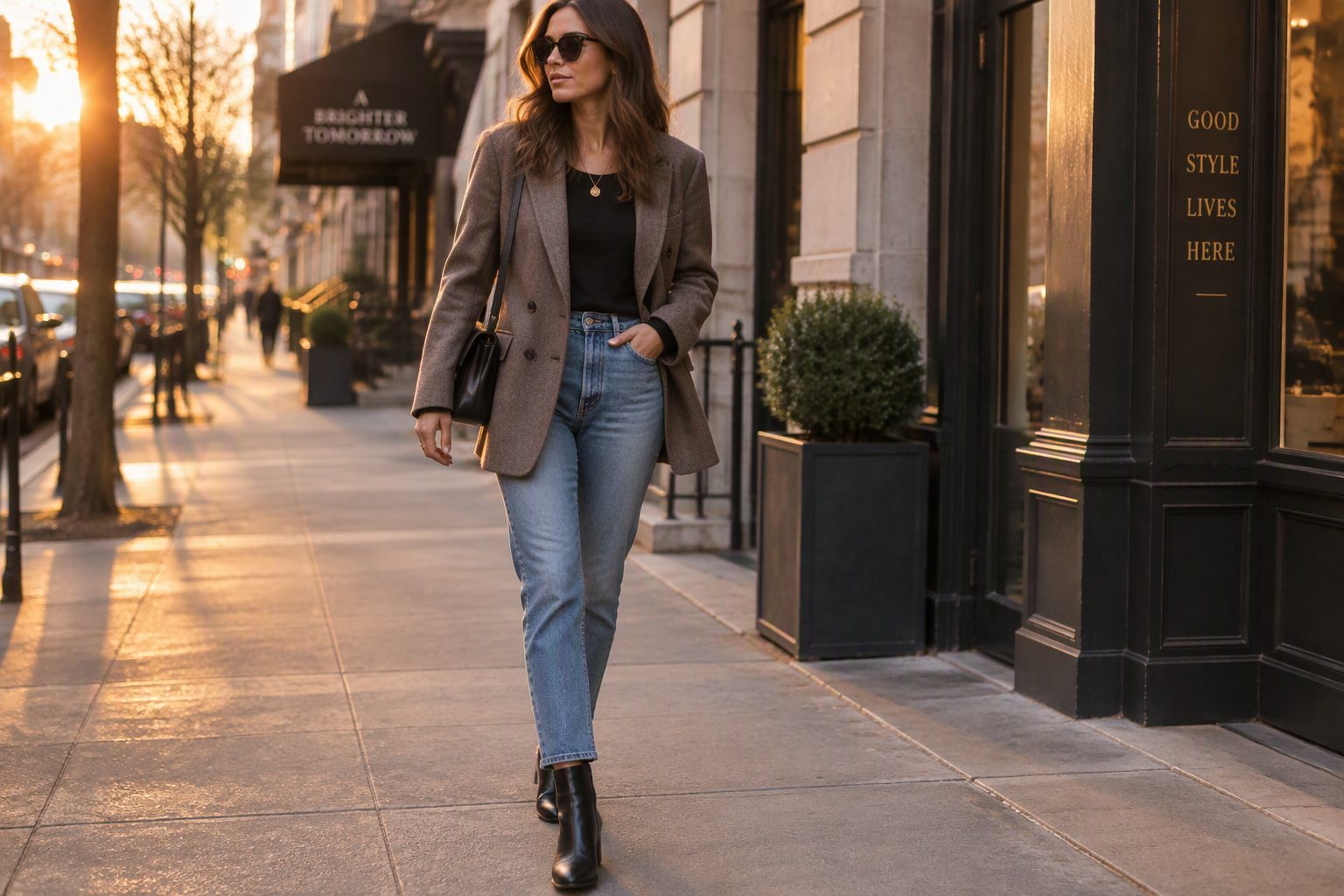
Swap the trousers for your favorite jeans (straight-leg or wide-leg both work). Change the structured top underneath to a simple white t-shirt or a fine-knit top. Push up the blazer sleeves to just below the elbow — this small move instantly relaxes the entire look. Keep the flats or switch to white sneakers if you’re walking.
The blazer is doing the heavy lifting here. Over a t-shirt and jeans, it reads “creative professional” rather than “corporate.” This is also the look that works best on video calls — the blazer frames your face and looks intentional on camera.
Evening: Drinks or Dinner
For post-work socializing, you want the same blazer to feel transformed. The trick is to change what’s underneath it and swap your shoes.
Replace the day top with a silk camisole or a fitted bodysuit. Swap the flats for heeled ankle boots or strappy sandals. Add statement earrings — oversized gold hoops work beautifully against a blazer’s structured neckline. If it’s a colder evening, drape a scarf around your neck for extra texture.
You can also change the blazer’s silhouette entirely by belting it. A thin leather belt cinched at the waist over an open blazer creates a completely different shape — more hourglass, more evening-appropriate.
Three Blazers Worth Investing In
If you’re building your blazer collection, here are the three styles I’d recommend, in order of priority:
-
The neutral everyday blazer. Black or navy, single-breasted, unstructured. This is the one you’ll wear three times a week. Look for a blend of wool and elastane that holds its shape but moves with you.
-
The oversized blazer. Slightly slouchy, slightly longer, in a tonal color (camel, grey, or cream). Worn open over a t-shirt, it adds instant cool factor to any outfit. Size up on purpose or look for a style designed to be oversized.
-
The statement blazer. A plaid, checkered, or textured blazer that does the talking. You’ll wear this less often, but when you do, the outfit is complete the moment you put it on.
Common Blazer Mistakes to Avoid
- Shoulders too wide. Unlike jeans, you can’t size down a blazer that’s too big in the shoulders. The shoulder seam should sit at the edge of your shoulder bone.
- Sleeves too short. The sleeve should end at your wrist bone. If they’re too long, a tailor can fix it for $15–20.
- Wrapping the blazer closed. Unless it’s a double-breasted blazer designed to be worn buttoned, wear it open. Buttoning a single-breasted blazer pulls at the fabric and creates an awkward shape.
- Wrong fabric for the season. Heavy wool in July looks as wrong as linen in December. Medium-weight wool blends work from fall through spring; swap to cotton or linen blends for summer.
Final Thought
The beauty of a blazer is that it does the thinking for you. On days when you’re rushed, tired, or simply not in the mood to figure out an outfit, throwing a blazer over whatever you’re wearing is the style equivalent of pressing the “good enough — actually, better than good enough” button. And that, in my book, makes it the single best investment in your wardrobe.